Makhana: The Desi Superfood for Guilt-Free Snacking
Light, crunchy and naturally wholesome — makhana (fox nuts) has gone from a vrat staple to India’s favourite healthy snack. Learn what makes it special, how to enjoy it, and how to pick the best quality.
 Hand-Picked Jumbo
- Makhana are the popped seeds of the lotus-family plant Euryale ferox, grown mainly in Bihar’s Mithila region.
- They are naturally low in fat, gluten-free and a source of plant protein and fibre.
- Roasted makhana is a smart swap for fried chips and namkeen.
- Bigger “suta” size and uniform white colour indicate premium quality.
If you are looking for a snack that is crunchy, satisfying and still kind to your body, makhana deserves a permanent spot in your pantry. Once reserved for fasting days and festive kheer, these light, airy fox nuts are now loved by fitness enthusiasts, working professionals and kids alike.
What Is Makhana?
Makhana, also called fox nut or lotus seed, comes from the Euryale ferox plant that grows in ponds and wetlands. Nearly all of India’s makhana comes from the Mithila region of Bihar, where farming families harvest the seeds from the water, sun-dry them, and then roast and pop them by hand — a skilled process passed down through generations.
The bigger and whiter the popped seed, the higher the grade. SwadDesi’s Jumbo Makhana is hand-picked 5-suta phool — the premium jumbo size prized for its crunch.
Why Makhana Is a Smart Snack
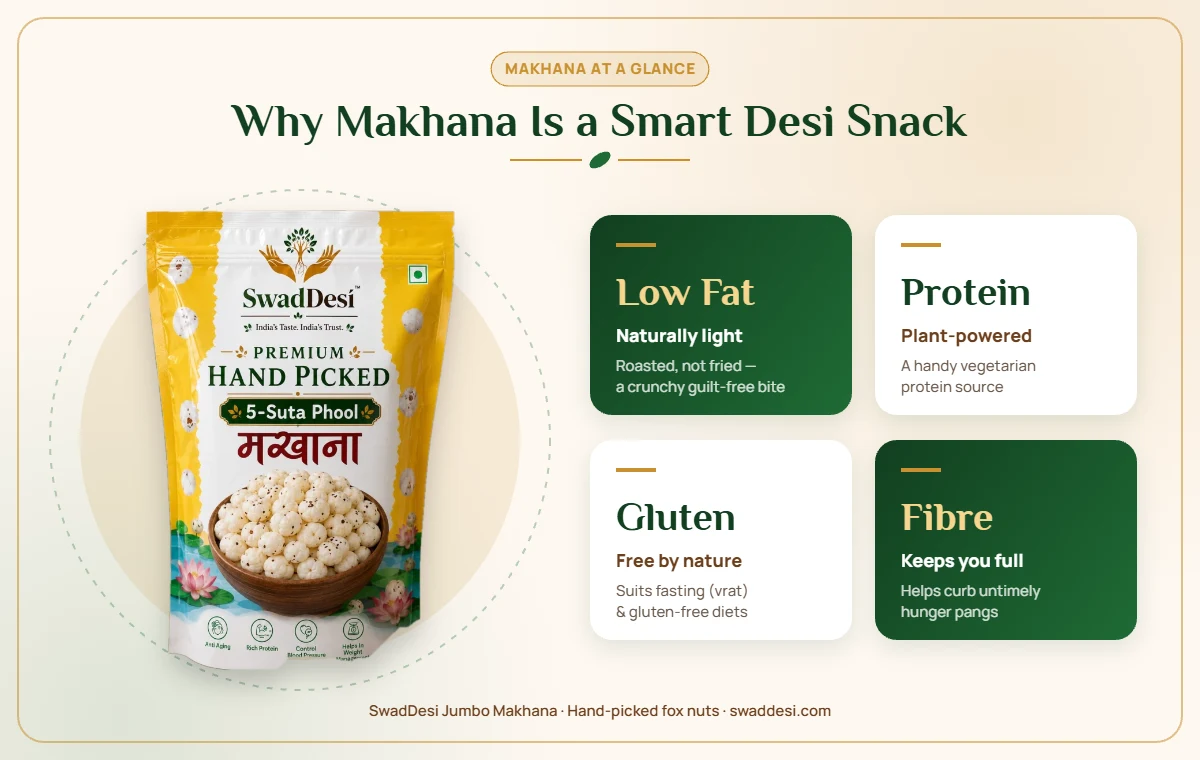
Naturally Low in Fat
Makhana contains very little fat on its own, so dry-roasted makhana is a lighter alternative to fried snacks.
Plant-Based Protein
It offers a useful amount of vegetarian protein, making it a satisfying mid-meal bite.
Gluten-Free
Makhana is naturally free of gluten — perfect for vrat (fasting) and gluten-conscious diets.
Fibre that Fills You
The fibre in makhana helps keep you full and can help curb untimely hunger pangs.
Makhana is also a natural source of minerals such as magnesium, potassium and phosphorus. Because it is light and filling, it fits easily into weight-conscious and balanced eating plans.
Good to know: Makhana is healthiest when roasted with little oil or ghee and lightly seasoned. Watch out for heavily salted or buttered versions, and consult a doctor or dietitian for personal dietary advice.
Delicious Ways to Enjoy Makhana
- Roasted snack — dry-roast with a teaspoon of ghee, salt and pepper.
- Makhana kheer — a festive dessert simmered in milk with cardamom and saffron.
- Makhana curry — add roasted makhana to a rich tomato-cashew gravy, a classic in North Indian homes.
- Trail mix — toss with roasted nuts and seeds for an office-friendly snack.
- Vrat recipes — a go-to ingredient during Navratri and other fasts.
Quick Roasted Makhana Recipe (5 Minutes)
Ingredients
- 2 cups SwadDesi Jumbo Makhana
- 1 tsp ghee or mustard oil
- ¼ tsp rock salt (sendha namak)
- ¼ tsp black pepper powder
- A pinch of chaat masala (optional)
Method
- Heat ghee in a heavy pan on low flame.
- Add makhana and roast, stirring continuously, for 4–5 minutes.
- Crush one to check — it should snap crisply.
- Turn off the flame, sprinkle the seasoning and toss well.
- Cool completely and store in an airtight jar.
How to Choose Good-Quality Makhana
- Size: larger seeds (4–5 suta and above) are premium and crunchier.
- Colour: look for a uniform, bright white with a few natural brown specks.
- Texture: good makhana is light, dry and crisp — not chewy or damp.
- Packaging: choose sealed, moisture-proof packs to keep the crunch intact.
Love Ready-to-Eat? Try NutriDesi Flavoured Makhana
For snacking on the go, our sister brand NutriDesi offers roasted makhana in exciting flavours — Himalayan Salted, Peri Peri, Pudina, Cheese Herbs, Black Pepper and Cream & Onion.
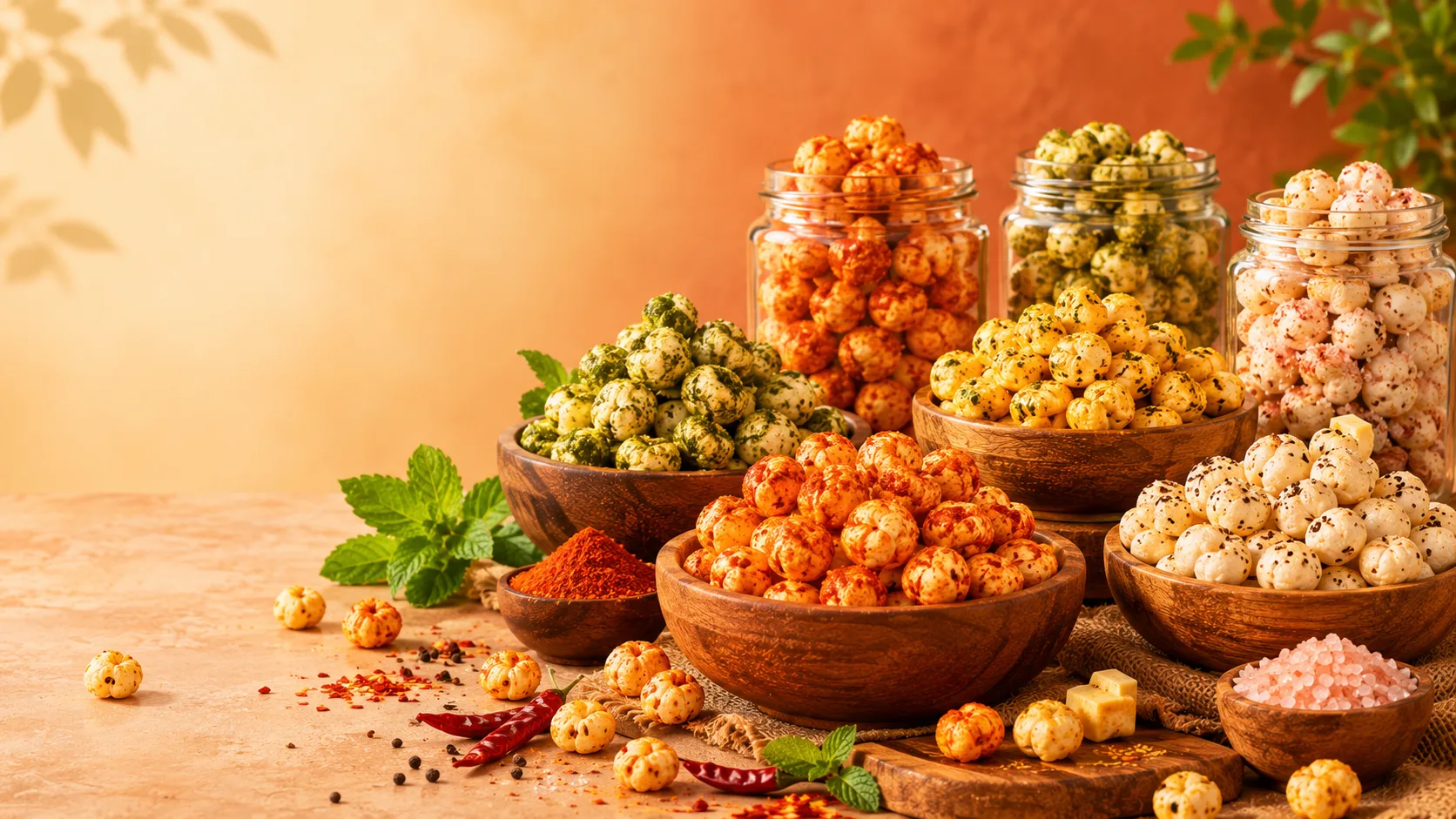
Whether you roast it at home or grab a ready pack, makhana is proof that healthy snacking can be truly desi and truly delicious.
Frequently Asked Questions
Is makhana good for weight loss?
Makhana is light, low in fat and contains protein and fibre that help keep you full, so it can be a smart snack in a balanced, calorie-conscious diet. Avoid heavily buttered or salted versions.
Can makhana be eaten during fasting (vrat)?
Yes. Makhana is a traditional vrat food and is naturally gluten-free. Season it with sendha namak for fasting days.
How much makhana can I eat in a day?
A handful (around 25–30 g) is a common snack portion for most adults. Your ideal amount depends on your overall diet — ask a dietitian for personal advice.
What does 5-suta makhana mean?
Suta refers to the size grade of makhana. 5-suta and above is the premium jumbo grade, with bigger, whiter and crunchier seeds.
How do I keep makhana crunchy?
Store makhana in an airtight container away from moisture. If it turns soft, dry-roast it on a low flame for 3–4 minutes to restore the crunch.
Get Hand-Picked Jumbo Makhana
Premium 5-suta phool makhana from Mithila — crunchy, light and wholesome.
Makhana Picks for Every Craving
-
Sale!
SwadDesi Jumbo Makhana – 250 g
Original price was: ₹400.₹300Current price is: ₹300. Add to cart -
Sale!
NutriDesi Himalayan Salted Makhana – 80 g
Original price was: ₹199.₹159Current price is: ₹159. Add to cart -
Sale!
NutriDesi Peri Peri Makhana – 80 g
Original price was: ₹199.₹149Current price is: ₹149. Add to cart -
Sale!

NutriDesi Makhana Combo – Peri Peri, Cheese Herbs & Pudina (80 g x 3)
Original price was: ₹705.₹472Current price is: ₹472. Add to cart